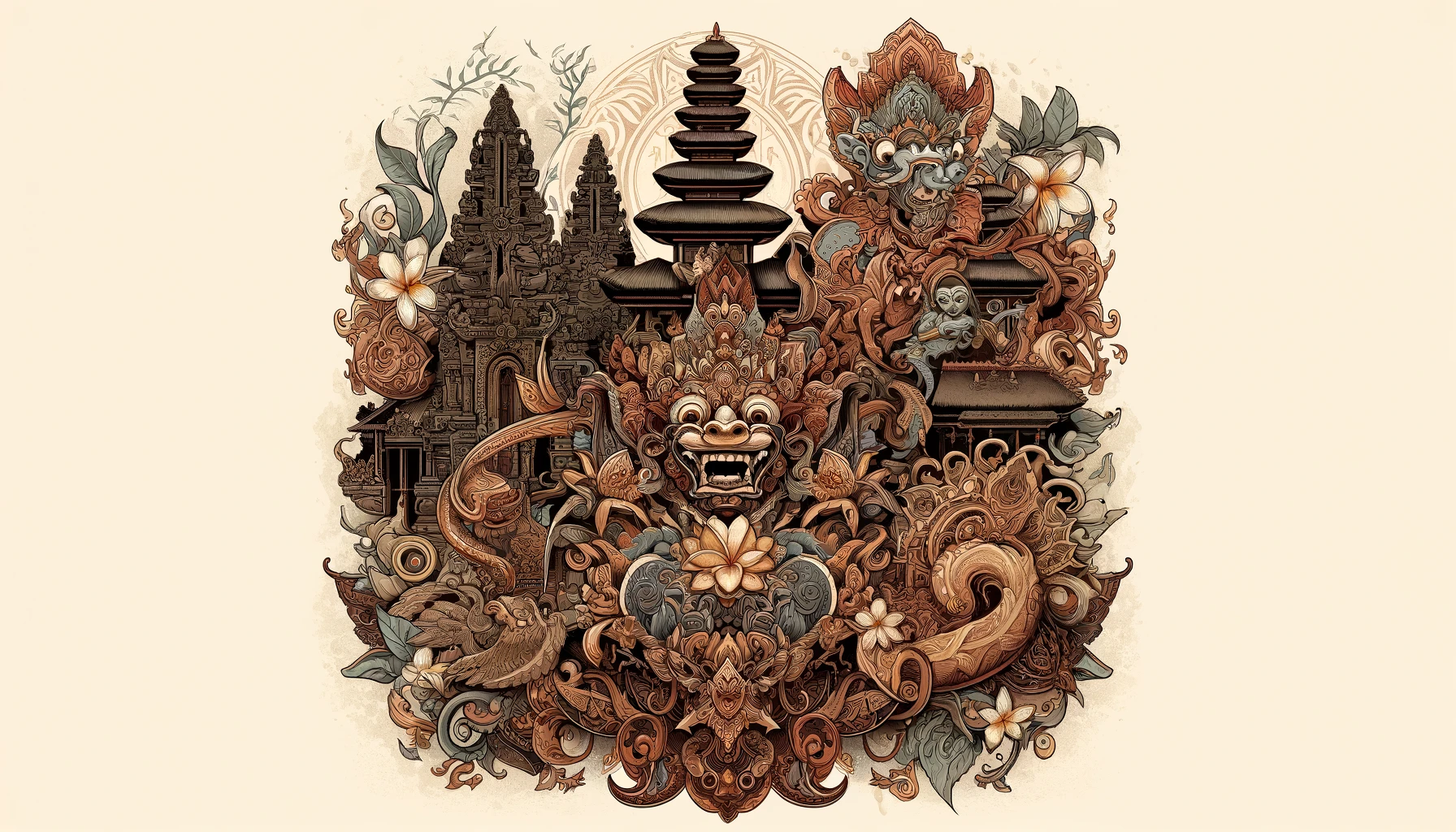
Exploring Balinese Art and Architecture in Tattoos
The influence of Balinese art and architecture on tattoo designs is a fascinating area of study that showcases Bali’s rich cultural tapestry. This influence is evident in the intricate patterns, symbols, and themes drawn from traditional Balinese art forms and architectural motifs that have been incorporated into modern tattoo designs. Here, we will explore some of these elements and their significance.
Balinese Art Forms in Tattoos
- Barong and Rangda: One of the most iconic motifs derived from Balinese mythology is the Barong and Rangda, representing the eternal battle between good and evil. Barong, a lion-like creature, and Rangda, the demon queen, are popular figures in the Bali tattoo scene, symbolizing protection and spiritual balance. The detailed depiction of these figures in tattoos mirrors their ornate representations in Balinese carvings and paintings.
- Wayang Kulit (Shadow Puppets): The art of Wayang Kulit, or shadow puppetry, features elaborate designs that are also popular in tattoo art. The intricate patterns and the dramatic poses of the puppets are commonly used in tattoos to narrate stories or depict characters from Hindu epics like the Ramayana and Mahabharata, which are central to Balinese culture.
- Floral and Fauna Motifs: Floral motifs such as the lotus, frangipani, and hibiscus, along with fauna like the Bali mynah and the koi, are frequently seen in Balinese art and are commonly adopted in tattoo designs. These elements are often used to symbolize beauty, purity, and the natural world, reflecting the island’s lush landscapes.
- Que faire à Marrakech le soir ? 5 conseils pour profiter de la ville
- Comment mettre sa maison en location saisonnière à Marrakech ?
- Lifestyle Destinations in Indonesia for Modern Leisure and Social Experiences
- How Malls in Indonesia Are Becoming Lifestyle Destinations
- 東京で楽しむホテルステイと都会の魅力
Architectural Elements in Tattoos
Balinese temples and palaces often feature ornate gates guarded by mythical creatures such as dragons and demons. These architectural elements are popular in tattoos, representing protection and the threshold between the physical and spiritual worlds. The detailed carvings of these gates and guardians translate into striking tattoo designs that carry deep spiritual significance.
The use of geometric patterns in Balinese architecture, seen in everything from the layout of temples to the details of wall carvings, is another element that inspires tattoo artists. These patterns can represent various philosophical and spiritual concepts, such as the balance of opposites, cosmic order, and the infinite nature of life.
Cultural and Spiritual Significance
Incorporating elements of Balinese art and architecture into tattoos is not only about aesthetics but also involves a deep cultural and spiritual resonance. Many people choose these designs to honor Balinese heritage or to embody the spiritual meanings associated with the motifs.
The adoption of Balinese art and architectural elements into tattoo designs is a testament to the enduring appeal and profound symbolism of these cultural expressions. As tattoo artists and enthusiasts continue to explore these themes, the rich tapestry of Balinese culture finds new life on a global stage, etched not only in stone and paint but also in skin.